
If lunch leaves you bloated, or you have skipped a family function because of acidity, you already know the pattern. A strip of antacids lives in the bag. Digestive complaints are among the most common reasons people in India see a doctor, and a lot of households learn to work around them.
I am Dt. Alekhya, nutritionist and gut health consultant at Diet2Anybody. Consults are in Miyapur, Hyderabad, and online. The story I hear is rarely dramatic. Lunch happens at a desk, or it does not happen. Chai is two or three cups, often before any food. Dinner starts after the last call. Bowel habits have been off for so long that people file the whole thing under stress.
A gut health nutrition plan is how I answer that week. It supports the microbes living in your digestive tract, using food the kitchen already knows. Curd, dals, vegetables, millets, and a dinner time you can keep will do more than a new tin of powder.
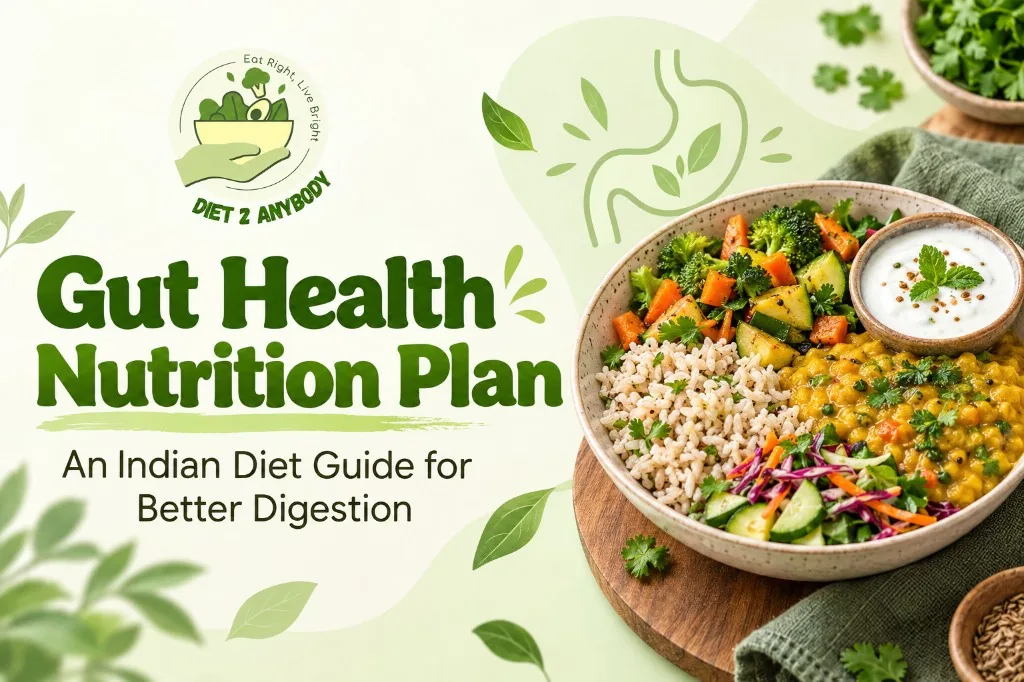
This guide covers what gut health means, which foods help, which are worth eating less often, and a 7-day gut health meal plan you can cook this week.
What gut health means
Your gut is home to a vast community of microbes, together called the gut microbiome. They help break down parts of food you cannot digest on your own, they take part in making certain vitamins, and they interact with immune defences.
People like to call the gut a second brain. I would not plan meals around that slogan. Mood, sleep, and stress do show up in digestion — I see that every week in clinic — and food is still a poor substitute for medical care when the problem is an ulcer, a thyroid disorder, or a medicine side effect.
What I do plan for is variety. A more varied microbiome tends to come from a wider mix of plant foods, fermented foods you actually tolerate, and enough fibre. An Indian diet for gut health is built on that, not on a ban list of roti and rice.
Common signs your gut needs attention
Frequent bloating or gas
Especially by evening, or after a very large or very oily meal.
Constipation or loose stools
A pattern that keeps returning, not one off day.
Acidity or heartburn
Often after late, spicy, or fried dinners.
A heavy, sleepy feeling after eating
More than ordinary post-lunch quiet.
Foods that repeatedly disagree with you
The same item, not a one-time wedding buffet.
These signs are clues. They are not a diagnosis. Blood in the stool, weight you cannot explain, pain that does not settle, or trouble swallowing need a doctor, not another week of home experiments. That list is further down.
Core principles of a gut health nutrition plan
Before the food lists, these are the rules I actually use with clients:
- 1
Eat more fibre
It feeds the bacteria you want more of. Raise it gradually.
- 2
Include fermented foods
Curd, chaas, and fermented batters, if you tolerate them.
- 3
Eat more than one colour
Different vegetables and fruits feed different microbes.
- 4
Leave room for real meals
Ultra-processed snacks crowd out the food that helps.
- 5
Drink enough water
Fibre without fluid is a common reason constipation gets worse.
- 6
Repeat the pattern
Gut comfort comes from ordinary weeks, not a detox weekend.
The plate I trust looks like the one described in the WHO healthy diet fact sheet: vegetables, fruit, legumes, and whole grains as the base, and fewer sugary drinks. If you want those portions written for your own kitchen, that is the gut health diet plan consult.
Best Indian foods for gut health
Probiotic foods in an Indian kitchen
Fermented food is already normal in Indian cooking. I ask for some of it most days, with one caveat. The ISAPP consensus statement on fermented foods draws a line I agree with: many traditional ferments contain live microbes, and that is not the same thing as a probiotic capsule with a named strain and a studied dose. Food still comes first for someone who is otherwise well.
Curd (dahi)
The probiotic food people will actually eat. Fresh, unsweetened, homemade when the house can manage it. Sweetened yogurt drinks are a different product.
Chaas (buttermilk)
Light, and useful in hot weather. Roasted jeera and a pinch of rock salt are enough.
Idli, dosa, and dhokla batter
Fermentation makes these easier for many stomachs than a dry maida snack.
Kanji
Black-carrot ferment, a winter drink in parts of North India. Use it in season. Do not hunt for it in June.
Home-fermented vegetables
A traditional ferment can carry live bacteria. A shop pickle in vinegar, oil, and a lot of salt does not do the same job.
Prebiotic foods that feed those bacteria
Prebiotics are fibres you do not digest and your gut bacteria do. Useful Indian sources:
Onion and garlic
Everyday, and a problem only if they clearly bloat you.
Raw or slightly green banana
Resistant starch. A very ripe banana is a different food.
Oats and barley (jau)
Easy breakfast swaps.
Ragi and other millets
Finger millet, plus bajra and jowar through the week.
Chickpeas, rajma, and moong dal
Start with smaller portions if pulses currently bloat you. Washed moong is the gentlest entry.
Sweet potato (shakarkandi)
A better evening starch than a pile of biscuits.
Flaxseed (alsi)
A small spoon, soaked, not a dry handful that sits in the throat.
High fibre Indian foods
Most adults I meet need more fibre than they are eating. I do not start them on three salads and a bran drink.
Whole wheat roti
In place of maida breads and most bakery snacks.
Brown rice or red rice
A few meals a week. White rice can stay, especially at dinner if that is what you digest.
Millets
Bajra, jowar, and ragi, rotated so you do not get bored.
Dals and legumes
At least once a day.
Seasonal vegetables
Lauki, tori, spinach, methi, carrots, and whatever the market is actually selling.
Fruit with the skin
Apple and guava, when the skin is clean and you tolerate it.
The ICMR–NIN Dietary Guidelines for Indians are the Indian reference I use for this: a varied plate of pulses, vegetables, fruit, nuts, and millets, with less ultra-processed food. If fibre is new, increase it over about two weeks and drink more water. The people who quit are usually the ones who doubled their dal and raw salad on day one.
Digestive spices and herbs
Indian cooking already uses spices with a long kitchen reputation for digestion. Research on several of them is still thin. They are cheap, they belong in the food, and I would rather add them than sell a separate syrup.
Jeera (cumin)
Roasted, in chaas or in a glass of warm water.
Ajwain (carom)
A household remedy for gas. A pinch, not a teaspoon.
Saunf (fennel)
Chewed after meals. This is the one habit I see people keep.
Ginger
Fresh, in tea or in the tadka, when nausea or heavy food is the complaint.
Hing (asafoetida)
In dals, especially for people who find pulses gassy.
Turmeric
In daily cooking, with black pepper. It is a spice in the pot, not a cure in a shot glass.
Fats and protein, still on the plate
I do not strip fat off a gut plan. A small amount of ghee, a cold-pressed oil, nuts, and seeds help you absorb fat-soluble vitamins and make dal worth eating. Protein comes from dals, curd, paneer, eggs, fish, or chicken, depending on what you eat.
If weight loss is also the goal, the same foods still apply. Portions and cooking method change. The Indian food diet plan for weight loss is the companion piece for that, and it keeps rice and roti in the week.
Foods to limit for better digestion
You can keep the foods you love at a wedding. These are the ones I ask people to shrink on ordinary days, because they are the usual reason a normal lunch feels like a mistake:
Deep-fried snacks
Samosa, pakora, and bhajji, especially as the daily 5 pm meal.
Sugar-sweetened drinks
Including packaged juices and very sweet lassi.
Maida-heavy products
Bakery bread, many biscuits, and instant noodles.
Ultra-processed packets
Chips, cream biscuits, and anything that replaces a meal.
Very hot red chilli
If acidity or reflux is already a problem. Spice is not the enemy for everyone.
Tea or coffee on an empty stomach
Three cups before breakfast is a pattern I see constantly in Hyderabad offices.
Alcohol and smoking
Both irritate the digestive tract. Cutting back helps more than a new probiotic.
Some people with IBS or lactose intolerance do badly with foods that look “healthy” on this list: milk, onion, garlic, or a large bowl of rajma. If a food upsets you every time, write it down for a week and bring that diary to a consult. Guessing from a reel is how people end up afraid of dal.
Day-wise chart
7-day gut health meal plan
This is a starting week, not a prescription. Change portions for your appetite, budget, and any medical advice you already have. It is vegetarian. Eggs, fish, or chicken can replace a dal or a paneer meal if you eat them.
Poha, dal, and khichdi
Day 1
Sample day
Breakfast
Vegetable poha with peanuts and a glass of chaas
Lunch
2 rotis, moong dal, lauki sabzi, and salad
Evening snack
Roasted chana
Dinner
Khichdi with curd
Daily extras
Water
About 2 to 3 litres through the day, unless your doctor has capped fluids. Kidney disease changes this number. Do not copy a hydration target from the internet if you are on a fluid limit.
Seeds
A small spoon of soaked flaxseed or chia.
Saunf
After lunch and dinner, if you like it.
A short walk
After dinner, 15 to 20 minutes, if walking is allowed for you.
Portions, shift timings, and the foods you already cook are what a consult changes. The week above is only the template.
Fit the plan to your kitchen
A plan that fights the region will last a week. I would rather edit the meal you already cook.
North India
Whole wheat, bajra, and makki rotis belong here. Kanji makes sense in winter. Lassi is fine when it is not a dessert. If reflux is the complaint, I look at late parathas and very oily dal makhani before I look at wheat itself.
South India and Hyderabad
Fermented idli and dosa, ragi mudde, curd rice, rasam, and buttermilk are already a gut-friendly pattern. In Telangana tiffins I use jonna roti and pesara dosa more often than I use anything from a packet. Along the Andhra coast, rice fermented overnight — chaddi annam — is a traditional food, closer to pakhala than to a probiotic drink from a pharmacy.
Hyderabad has its own trap. The plate that backfires in my Miyapur consults is usually not idli. It is biryani at 10:30 pm, after chai through the afternoon and no real lunch. If you are in the city, the dietitian in Hyderabad page is the practical version of this article: same food, with follow-ups.
East India
Fish, leafy greens, and fermented rice — pakhala or panta bhat — are traditional, and they fit this plan better than a borrowed smoothie. Mustard oil in cooking amounts is ordinary food, not a problem to eliminate.
West India
Dhokla, khichdi, kadhi, and jowar bhakri are the easy wins. Theekha snacks every evening are the part I would shrink.
Lifestyle habits that support digestion
Food is half of what people change, and it is the half they obsess over. These matter just as much, and they cost less than a supplement:
Eat at roughly the same times
The gut likes a rhythm. A 4 pm lunch and a midnight dinner is the rhythm I see fail.
Chew
Digestion starts in the mouth. A meeting-lunch swallowed in eight minutes will feel like a large meal even when it was not.
Finish dinner 2 to 3 hours before bed
This is the change that helps acidity and sleep for a lot of working people.
Treat stress as a gut symptom, not a personality flaw
A walk, a few slow breaths, or yoga. I do not pretend a breathing exercise replaces care for a serious anxiety disorder.
Sleep 7 to 8 hours
Short sleep and messy digestion travel together. I cannot separate them in consults.
Move most days
A 20 to 30 minute walk is enough to help many people stay regular.
Use antibiotics only when they are prescribed
They are sometimes necessary. They also knock back gut bacteria. Do not take a leftover strip because a colleague had the same stomach pain.
Mistakes that send people back to antacids
Capsules instead of meals
A probiotic supplement is not a substitute for dal, vegetables, and curd. It can be discussed after antibiotics, with your doctor. It is a weak plan on its own.
Too much fibre, too fast
Gas and cramps in week one, then the person concludes that “healthy food” does not suit them.
Cutting a whole food group
Unless a doctor has a reason. Less variety is the opposite of what the microbiome responds to.
Detox teas
Your liver and kidneys already do this work. A tea that keeps you in the bathroom is not a cleanse.
Expecting a new stomach by Sunday
Some people feel less bloated in 2 to 4 weeks. I will not promise that. Constipation from a medicine, low thyroid, or too little fluid will not budge because the roti changed.
A two-week starter checklist
Pick these before you try to rebuild every meal. Two weeks, then keep what felt easier.
Curd or chaas once a day
With lunch. Not a sweet bottled drink.
One whole-grain swap
Roti, a millet, oats, or brown rice, in place of one maida snack.
Dinner moved earlier
Finished 2 to 3 hours before you sleep.
Water next to the extra fibre
Especially in the week dals and vegetables go up.
A walk after dinner
15 to 20 minutes, if your doctor has not told you to avoid it.
When to see a doctor
A food plan can ease ordinary digestive discomfort. It does not replace a clinician. Please see a doctor, and then a dietitian if you want the meals adjusted, if you have:
Blood in the stool
Or stools that are black without an obvious cause such as an iron tablet your doctor already explained.
Weight loss you cannot account for
Especially with a falling appetite.
Pain that keeps returning
Or pain that wakes you.
Difficulty swallowing
Food sticking, or pain when it goes down.
Symptoms that are still there after a few weeks
Of consistent meals, not of random fixes.
A family history of bowel disease
Bring that up even if your own symptoms feel mild.
This article is general education. It is not a diagnosis, a treatment, or a personal plan. Needs change with diabetes, kidney disease, IBS, IBD, pregnancy, and food allergies. Follow the clinician who knows your reports.
Frequently Asked Questions
Article FAQ
How long does a gut health nutrition plan take to show results?
Some people notice less bloating and more regular bowel movements within 2 to 4 weeks. Changes in the microbiome itself take longer and depend on sticking with the pattern. I do not promise a date.
Is curd enough as a probiotic?
Curd is the right place to start. It is not the whole plan. Pair it with chaas or a fermented batter, and with fibre from dals, vegetables, fruit, and whole grains. Variety matters more than one hero food.
Can I follow this plan if I am vegetarian?
Yes. The 7-day gut health meal plan is vegetarian. Add eggs, fish, or chicken in place of a dal if you eat them. Vegans can use fermented soy or a coconut-based option they tolerate, and should still get enough protein from pulses.
Is rice bad for gut health?
No. Rice is easy to digest for many people, and it is the grain a South Indian lunch is built on. Mix in brown or red rice some days, and always put dal and vegetables on the same plate. The problem I see is rice at 11 pm after a skipped lunch, not rice itself.
Should I take probiotic supplements?
Most healthy people can get what they need from food. A supplement is sometimes discussed after a prescribed antibiotic. Ask your doctor before you buy one, especially if you are immunocompromised, seriously ill, or pregnant.
Can this plan help with acidity?
Regular meals, less fried food, and an earlier dinner reduce acidity for many people I work with. Pain that is severe, frequent, or paired with weight loss, vomiting, or trouble swallowing needs a doctor. Food advice comes after that, not instead of it.
Start with two or three changes
A calmer gut is built from ordinary plates. Curd with lunch. An extra serving of vegetables. A walk after dinner. The best gut health nutrition plan is the one your family will still be eating in a month.
Start with two or three changes from this guide. Swap one maida snack for a whole grain. Add buttermilk in the afternoon. Eat dinner earlier. Hold those for two weeks, then add the next thing. Energy and bowel habits are the feedback. They are more honest than a new product.
For a personalized gut health diet plan written around your kitchen, your timings, and your reports, book a consultation. The sample week above is the place to begin.